Top Gold Silver Testing Methods for Global Buyers

For global buyers, Gold Silver Testing is a practical safeguard against costly purchasing mistakes. Precious metals can look convincing under warehouse lighting, yet surface color proves very little. Reliable evaluation combines visual inspection, documented hallmarks, weight, dimensions, and an appropriate laboratory method. A calibrated scale, clean gloves, and clear photographs can reveal useful inconsistencies before shipment. Small details matter.

This guide introduces common testing methods, including magnet checks, density measurement, acid testing, X-ray fluorescence, and professional fire assay. Each method has limits. A magnet may identify some base-metal content, but it cannot confirm purity. Acid testing can damage a small area and requires trained handling. XRF testing is fast and non-destructive, although plating, curved surfaces, or uneven composition may affect readings. Fire assay is highly respected for accuracy, but it usually requires controlled laboratory conditions and more time.

Experienced buyers should compare test results with the seller’s invoice, assay certificate, refining records, and applicable hallmark standards. Independent laboratories provide stronger assurance than informal claims. Still, no method is perfect. Instruments need calibration, operators can make mistakes, and sampling can miss hidden variations. That uncomfortable point deserves attention. When a result seems unusually favorable, request a second test before completing a major transaction. Good practice also means using accredited providers and following local import, consumer protection, and precious-metal regulations. Careful Gold Silver Testing supports transparent trade, protects budgets, and builds confidence between international suppliers and buyers.
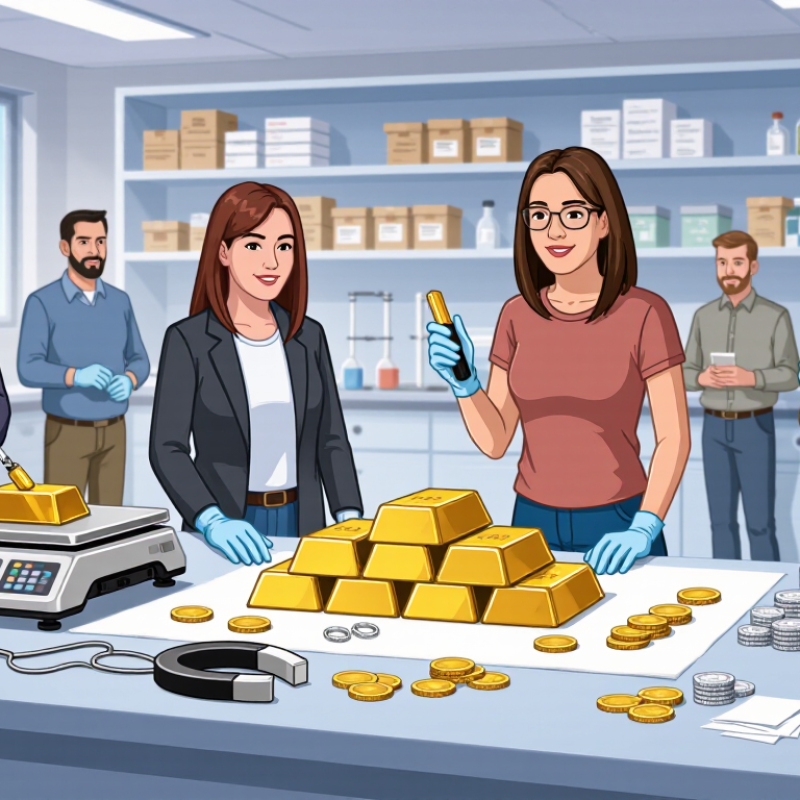
Top Gold Silver Testing Methods for Global Buyers

Gold and Silver Testing: Purpose, Scope, and Key Principles

Top Gold Silver Testing Methods for Global Buyers

Gold and silver testing protects buyers from incorrect purity claims and costly disputes. Its purpose is clear: verify composition, weight, and consistency before payment or resale. The scope should cover samples, finished products, bars, coins, and recycled metal. No single test is perfect. A touchstone test offers a quick indication, but it depends heavily on operator skill. Density testing adds useful evidence, while X-ray fluorescence can examine surface composition without damaging the item. Fire assay remains highly accurate, yet it requires controlled laboratory procedures and representative sampling.

Tips: Record the item’s weight, dimensions, photos, and test results together. Test several points when plating or surface treatment may affect readings. Keep samples sealed and labeled after collection. Small details matter. Do not rely on color alone. One weak habit is accepting a supplier’s certificate without checking its sample identity. That shortcut can undermine an otherwise careful purchasing process.

Global buyers should define acceptance criteria before goods leave the supplier. Testing equipment needs regular calibration and trained users. Environmental conditions can influence certain measurements, especially density calculations. Independent laboratory confirmation is sensible when values are disputed or shipments are high-value. Results should state the method, sampling location, instrument condition, and uncertainty. Buyers should also compare test findings with invoices and specifications. Sometimes, the testing plan itself needs revision. A practical system is not flawless, but it should be traceable, repeatable, and honest about its limits.

Top Gold & Silver Testing Methods for Global Buyers

Common precious-metal fineness levels expressed as parts per thousand. XRF is widely used for rapid, non-destructive screening; fire assay is a reference method for gold; silver content may be confirmed through cupellation, titration, gravimetric analysis, or laboratory-based instrumental testing.

Gold fineness commonly includes 999, 916, 750, 585, and 375, corresponding approximately to 24K, 22K, 18K, 14K, and 9K. Silver commonly appears at 999, 925, and 800 fineness. Buyers should define the tested area, sampling plan, calibration requirements, and acceptance tolerance before approving a shipment.

Preparing Precious Metal Samples for Accurate Testing

Before choosing gold or silver testing methods, global buyers should prepare a sample that truly represents the shipment. A shiny surface can mislead. Dust, plating, solder, or moisture may distort results. Experienced inspectors usually record the item’s weight, appearance, source lot, and condition before cutting or filing.

Use clean, non-ferrous tools and fresh gloves. Avoid touching the testing area with bare hands. For bars, take filings from several points, not only the easiest corner. Mix the filings carefully, then divide them into sealed portions for independent testing. Keep one portion as a retained reference. Label every container with the lot number, mass, date, and sampler’s initials. Small details matter.

For jewelry or mixed scrap, separate visibly different materials before sampling. A surface test, such as X-ray fluorescence, can provide quick screening, but it may not reveal deeper layers or internal variation. A laboratory assay usually needs a properly prepared and representative portion.

Do not polish away unusual marks or discoloration; they may signal coating or uneven composition. I have seen rushed sampling create confident results from the wrong material. That mistake is easy to overlook. Photographs, tamper-evident seals, and a clear transfer record improve reliability between seller, buyer, and laboratory. Still, no method removes every uncertainty. Even careful sampling deserves a second look when values, textures, or test results disagree.

Comparing Fire Assay, XRF, and Acid Testing Methods

Top Gold Silver Testing Methods for Global Buyers

Comparing fire assay, XRF, and acid testing requires more than choosing the fastest tool. The World Gold Council reported 4,974.5 tonnes of total gold demand in 2024, including over-the-counter activity. At this scale, inconsistent testing can create costly disputes.

Fire assay remains the reference method for determining precious-metal content. It uses a measured sample and controlled melting, then separates gold from other metals. ISO 11426 recognizes this approach for gold determination. The result is highly reliable, but the test is destructive and usually slower. Sampling errors still matter. A perfect laboratory cannot fix a poor sample.

X-ray fluorescence, or XRF, is fast and non-destructive. It can scan a bar, coin, or jewelry surface within seconds. However, plating, uneven composition, and surface contamination may distort readings. Calibration and operator skill are essential. Acid testing is cheaper and useful for quick screening. It compares surface reactions with known reference solutions, but it cannot reliably measure precise purity. It may also miss layered construction.

In practical buying work, I would use acid testing as an initial filter, XRF for rapid verification, and fire assay for final settlement or disputed material. This layered approach reflects ISO-based practice, yet it is not flawless. XRF readings can vary across different points. Fire assay can also expose sampling mistakes late. Buyers should record sample locations, equipment settings, laboratory conditions, and test dates before accepting a result.

Top Gold Silver Testing Methods for Global Buyers - Comparing Fire Assay, XRF, and Acid Testing Methods

Comparison Dimension Fire Assay X-Ray Fluorescence (XRF) Acid Testing
Primary Principle The sample is fused with lead-based or alternative collection materials, followed by cupellation and instrumental or gravimetric measurement. X-rays excite atoms in the sample, and the emitted characteristic energies are measured to estimate elemental composition. Selected acids react differently with metals of different purity; the visible reaction is compared with known reference standards.
Typical Result Quantitative precious-metal content, commonly reported in grams per tonne (g/t), parts per million (ppm), or percentage. Rapid elemental composition, alloy percentage, and estimated karat or fineness for the tested surface. Qualitative or semi-quantitative indication of gold fineness; usually expressed as an approximate karat range.
Gold Measurement Capability Suitable for high-accuracy measurement across a broad range of gold concentrations when sampling and laboratory controls are appropriate. Strong for jewelry, bullion, concentrates, and finished products when the sample is homogeneous and properly presented. Useful for distinguishing common gold grades, such as approximately 10K, 14K, 18K, and 22K, but not for precise final valuation.
Silver Measurement Capability Can provide quantitative silver results when the selected laboratory workflow includes a validated silver determination step. Can measure silver in many alloys and products, subject to calibration, surface condition, geometry, and concentration range. Generally provides only a broad indication of silver content and is less dependable for exact fineness or low-level silver concentrations.
Accuracy and Repeatability Typically the reference method for representative quantitative gold analysis, provided that sample preparation, assay procedure, and quality control are robust. Good repeatability for homogeneous, clean surfaces; accuracy can decrease with plating, coatings, roughness, curvature, or uneven alloy distribution. Lower repeatability because results depend on operator technique, lighting, reaction interpretation, and the tested location.
Sample Impact Destructive; the sample is melted, chemically processed, or otherwise consumed during testing. Generally non-destructive, although testing may leave a small surface mark or require cleaning and preparation. Usually minimally destructive because a small scratch or filed area is exposed to acid.
Typical Test Time Often one to several business days, depending on sample preparation, batch size, reporting requirements, and laboratory workflow. Usually seconds to a few minutes per measurement after the instrument has been prepared and calibrated. Often a few minutes per test, excluding any time needed to prepare or expose the test area.
Best Use Case for Global Buyers Final settlement, mining and recycling samples, high-value transactions, and disputes requiring a defensible quantitative result. Fast incoming inspection, inventory screening, jewelry and bullion verification, and testing multiple items with minimal handling. Preliminary screening, field checks, and low-cost sorting before a more rigorous laboratory method is commissioned.
Main Limitations Destructive, slower, more labor-intensive, and highly dependent on representative sampling and laboratory quality assurance. Primarily measures near-surface composition; plating, coatings, segregation, and irregular shapes can produce misleading results. Cannot reliably identify all counterfeit constructions or accurately quantify precious metals; acids are hazardous and require safe handling.
Sampling Requirement Requires a representative, well-mixed sample; poor sampling can create significant error even when the laboratory procedure is correct. Requires a clean, stable, sufficiently flat or well-positioned measurement area; multiple points improve confidence in heterogeneous items. Requires testing below the surface when plating or contamination is suspected; several locations should be checked on irregular items.
Recommended Buyer Decision Use when transaction value, regulatory documentation, or contractual settlement requires the strongest quantitative evidence. Use as the primary rapid screening method, followed by laboratory confirmation when results are disputed or the material is heterogeneous. Use only as an initial screening tool; do not rely on it alone for high-value purchases or final payment decisions.

Note: Actual detection limits, precision, turnaround time, and reporting formats vary by sample type, preparation method, instrument configuration, laboratory procedures, and applicable testing standards. For high-value transactions, use representative sampling and confirm material with a validated quantitative method.

Understanding Testing Accuracy, Limitations, and Certification

When buying gold or silver internationally, testing accuracy matters as much as price. X-ray fluorescence offers fast, non-destructive readings on surface composition. It works well for screening, but plating or uneven alloys can mislead the instrument. Acid testing is inexpensive and practical, yet it may damage the item and depends heavily on the tester’s experience. Fire assay remains highly trusted for gold content because it analyzes a measured sample. However, it is destructive, slower, and unsuitable for every finished product.

No method is perfect. That matters. A credible certificate should identify the tested material, purity result, sample weight, test date, and laboratory authorization. Buyers should check whether the laboratory follows recognized technical procedures and whether the certificate matches the shipment. Independent sampling is important because one corner of a bar may not represent the whole lot. In my experience, rushed checks create false confidence. Even professional reports need context, especially when results sit close to a required purity threshold.

Tips: Request the testing method before payment. Ask for photographs of marks and packaging. Compare the certificate number with the physical sample. For valuable shipments, use an independent laboratory and retain the sampling record. Do not treat a seller’s document as final evidence. A second test can feel inconvenient, but it may expose sampling errors, surface coating, or inconsistent alloy quality. Thresholds and certification rules also vary by destination, so confirm current import and trade requirements with qualified local professionals.

Choosing a Reliable Testing Method for Global Trade 马会

Top Gold Silver Testing Methods for Global Buyers

Choosing a Reliable Testing Method for Global Trade

A reliable testing method begins with the material, shipment size, and trade risk. For gold, portable X-ray fluorescence testing provides fast, non-destructive screening at warehouses or border facilities. It can identify surface composition within minutes. However, plating, uneven surfaces, and contamination may distort readings. Do not treat one scan as final proof.

For high-value transactions, fire assay remains a strong reference method because it measures gold content through controlled laboratory analysis. It is slower and requires sampling, sealing, and documented custody. Silver buyers may combine XRF with laboratory analysis, especially when alloys contain copper, lead, or other metals. The Silver Institute’s World Silver Survey 2024 reported record industrial silver demand of 654.4 million ounces in 2023. That scale increases pressure for consistent testing.

The World Gold Council reported 4,974.5 tonnes of total gold demand in 2024, including over-the-counter activity. The figures are sobering. Global buyers should request duplicate samples, calibration records, and independent certificates. ICP analysis can support multi-element verification when composition is disputed. Yet even advanced equipment cannot repair poor sampling. A sealed sample may still be unrepresentative. Buyers should record the lot number, test location, operator, moisture condition, and photo evidence before payment. I would also allow a referee test in the contract. That step feels costly, but disputes usually cost more. No method is perfect.ಿಕ್ಷ