How to Source Medical Accessories Globally?

Global sourcing of medical accessories requires more than comparing prices. A clinic may need tubing, masks, wound-care items, or protective components from several countries. Each product must match its intended use, technical requirements, and local healthcare rules. A lower quotation can hide weak materials, uncertain production controls, or expensive delays. Practical sourcing begins with a clear product specification. It should include dimensions, materials, packaging, labeling, shelf life, and performance expectations. Small details matter.

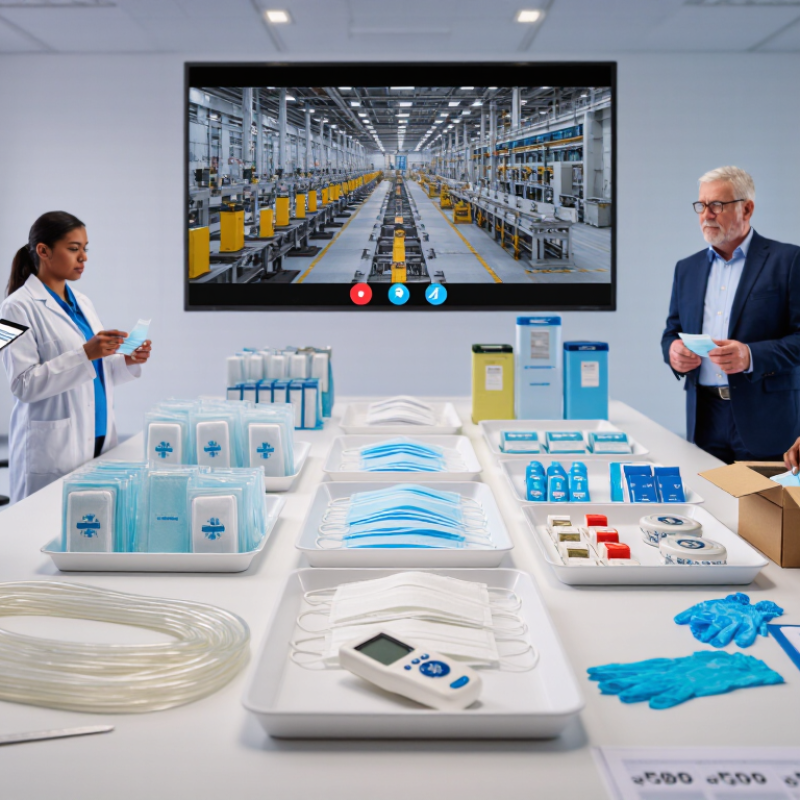
Supplier evaluation should combine documents with direct evidence. Request business licenses, quality certificates, product records, and recent test reports. Where relevant, review ISO 13485 systems and verify claims with recognized certification bodies. Check whether the supplier understands the destination market’s import and medical-device requirements. Samples should be inspected before large orders. Test them under realistic conditions, such as repeated fitting, moisture exposure, or transport vibration. A factory video is useful, but it is not an audit. That distinction matters.

Traceability protects both buyers and patients. Record batch numbers, inspection results, corrective actions, and shipping conditions. Use written agreements covering specifications, change notifications, recalls, and complaint handling. Experienced buyers also maintain backup suppliers, without treating them as automatic substitutes. Materials may differ. Performance may shift. No checklist is flawless. I have seen organized files create false confidence when a critical assumption remained untested. Therefore, sourcing decisions should be reviewed by quality, regulatory, clinical, and procurement teams. Careful communication builds trust across borders. The goal is not simply to find medical accessories at the lowest cost. It is to build a dependable supply chain that remains transparent, compliant, and responsive when conditions change.
How to Source Medical Accessories Globally?

Defining Medical Accessory Requirements and Sourcing Objectives

Sourcing medical accessories globally begins with a precise requirement, not a supplier list. Define the accessory’s intended use, patient contact level, dimensions, materials, and compatibility. A connector for respiratory equipment needs different controls than a reusable positioning strap. Measure twice. Details matter. Record operating temperatures, pressure limits, cleaning methods, packaging conditions, and expected service life. If sterilization is required, specify the validated method and allowable material changes.

Your sourcing objective should balance safety, consistency, cost, and supply continuity. Set measurable targets for defect rates, lead time, minimum order quantity, documentation, and batch traceability. Request technical drawings, material declarations, quality certificates, inspection records, and sample units before commercial approval. A sample may look acceptable while failing under repeated bending or disinfectant exposure. Test it in realistic conditions. Do not rely only on photographs or a polished factory presentation.

Global suppliers should demonstrate relevant manufacturing experience and a controlled quality system. Review their change-control process, complaint handling, subcontractor management, and production capacity. Confirm that labeling, packaging, and conformity documents match the destination market’s requirements. Local regulatory review is still necessary. I have found that early assumptions often create later delays, especially when one accessory fits several devices imperfectly. Leave room for technical revision, backup suppliers, and a second validation round. The cheapest quotation can become expensive when inspection, customs, or redesign costs appear.

Identifying Qualified Global Suppliers and Manufacturing Regions

How to Source Medical Accessories Globally?

Qualified sourcing starts with product classification, not supplier quotations. The World Health Organization reports more than two million medical devices, grouped into over 7,000 categories. That variety makes technical matching essential. Define the accessory’s intended use, material, dimensions, sterilization method, and performance limits. Then check whether the supplier maintains an ISO 13485 quality management system, traceability records, complaint procedures, and change-control documentation. Certification helps. It does not prove every batch is reliable.

Manufacturing regions should be assessed by capability, not labor cost alone. MedTech Europe’s 2024 industry data describes Europe as a major medical technology market, with approximately 15,700 companies and many small and medium-sized manufacturers. Asian production centers may offer strong molding, electronics, packaging, or assembly capacity. Regional specialization matters. Request recent audit reports, process validation evidence, sample inspection results, and business-continuity plans. The World Bank’s 2023 Logistics Performance Index also shows meaningful differences in customs efficiency, infrastructure, and shipment reliability between countries.

Visit the factory when possible. Watch the incoming inspection process. Ask how rejected components are isolated. A polished presentation can hide weak controls. No evaluation is perfect; even experienced buyers may overweight certificates and undercheck production discipline. Build a comparison matrix covering quality risk, lead time, regulatory support, communication, tooling ownership, and total landed cost. Small trial orders can reveal packaging damage, inconsistent labeling, or slow corrective actions before a larger commitment.

Evaluating Product Quality, Compliance, and Supplier Reliability

Global sourcing of medical accessories starts with product risk, not price. The WHO and UNICEF Global Report on Assistive Technology estimates that over 2.5 billion people need at least one assistive product. That demand increases pressure on suppliers and buyers. Each accessory should be matched to its intended use, patient contact, sterility status, and risk classification. Request technical files, material specifications, biocompatibility evidence, sterilization validation, and lot-level traceability. “Compliant” is not a complete answer.

Supplier certificates help, but they cannot replace verification. The ISO Survey 2023 recorded 1,265,216 ISO 9001 certificates worldwide. Yet certification does not prove consistent product performance. Review audit findings, corrective actions, complaint trends, change-control procedures, and delivery records. Ask for retained samples and compare them against a documented reference sample. Small differences in connector fit, packaging seals, or labeling can create serious operational problems.

Reliability needs testing.

A practical supplier review should include a remote assessment, an on-site audit when risk justifies it, and independent inspection before shipment. Track defect rates, on-time delivery, response speed, and regulatory notifications over several orders. The WHO Global Model Regulatory Framework for Medical Devices also emphasizes risk-based oversight and post-market surveillance. A supplier with attractive prices may still fail through weak traceability or delayed communication. I still distrust perfect audit scores. Real operations have deviations; reliable partners disclose them, investigate causes, and show measurable improvement.

How to Source Medical Accessories Globally? — Evaluating Product Quality, Compliance, and Supplier Reliability
Evaluation Dimension Applicable Product or Supply Area Evidence or Data to Collect Recommended Acceptance Benchmark Verification Method Risk Level if Evidence Is Missing
Product Classification Reusable, single-use, sterile, non-sterile, electrical, or patient-contact accessories Intended use, patient-contact duration, sterility status, anatomical contact, and classification rationale Classification documented before quotation and confirmed for each destination market Review the technical file, intended-use statement, and destination-country classification rules Critical
Quality Management System Manufacturing, assembly, packaging, inspection, and corrective-action processes Current ISO 13485 certificate, certificate scope, issuing body, audit status, and site address Certificate scope covers the exact product category and manufacturing site; certificate validity is independently checked Verify the certificate with the issuing certification body and conduct a risk-based supplier audit Critical
Risk Management Accessories that may affect patient safety, device performance, or clinical workflow Hazard analysis, risk-control measures, residual-risk assessment, and change history Risk controls are linked to product requirements, inspections, labeling, and post-market monitoring Review the risk-management file and sample records using ISO 14971 principles Critical
Biocompatibility Skin-contact, mucosal-contact, blood-contact, or tissue-contact components Material specifications, contact type and duration, biological evaluation, and test reports Evaluation covers the final finished product, including coatings, adhesives, colorants, and sterilization effects Check reports against the applicable ISO 10993 test strategy and confirm laboratory competence Critical
Sterilization and Packaging Sterile accessories, sterile barrier systems, and products with defined shelf life Sterilization method, validation summary, packaging validation, lot release records, and expiry basis Process validation and packaging integrity data cover the commercial configuration and transport conditions Review validation protocols, seal-strength or integrity results, and real-time or accelerated aging evidence Critical
Electrical and Functional Safety Powered accessories, sensors, chargers, cables, patient-connected components, and control modules Electrical ratings, compatibility limits, test reports, software or firmware version, and safety instructions Testing is performed on the final configuration and addresses applicable requirements of IEC 60601-1 and relevant collateral standards Compare test reports with the product specification and verify connector, voltage, EMC, and interoperability requirements Critical
Regulatory Documentation Products entering regulated markets or supplied as components of regulated medical devices Declaration of conformity, registration or listing evidence where required, labeling, instructions for use, and technical documentation Documents identify the correct manufacturer, model, intended use, risk class, and destination-market requirements Perform a document-to-product review and confirm that versions match the supplied goods Critical
Material and Chemical Compliance Plastics, metals, adhesives, cables, packaging, and components with restricted substances Material declarations, safety data sheets where applicable, restricted-substance statements, and supplier declarations Material composition is traceable to the finished-product bill of materials and destination-market requirements Use document review and targeted laboratory testing for high-risk materials or unexplained formulation changes High
Incoming and Final Inspection Dimensional, visual, functional, cleanliness, labeling, and packaging characteristics Control plan, sampling standard, acceptance criteria, calibration records, and inspection reports Every critical-to-quality characteristic has a measurable limit and defined disposition for nonconforming product Review inspection records and perform independent pre-shipment or receiving inspection High
Traceability Products requiring lot control, expiry control, recall capability, or complaint investigation Lot or serial-number structure, raw-material records, production history, release records, and distribution records Supplier can trace finished units to production lot, key materials, inspection results, and shipment destination Request a mock recall or traceability exercise covering one completed production lot Critical
Supplier Delivery Reliability Routine replenishment, critical spare parts, and accessories linked to clinical operations On-time-in-full delivery, lead-time history, backlog, capacity plan, and business-continuity arrangements Illustrative sourcing threshold: at least 95% on-time-in-full delivery over the previous six to twelve months Review shipment records, production capacity, dual-source options, and documented disruption procedures High
Defect and Complaint Performance All supplied accessories, especially patient-contact or device-critical items Defect rate, complaint trend, returns, adverse-event escalation process, and corrective-action records Illustrative target: less than 1% incoming defects for standard items, with stricter limits for safety-critical characteristics Analyze twelve months of quality data and verify that complaint investigations are documented and closed High
Change Control Materials, tooling, manufacturing site, sterilization process, packaging, software, or critical suppliers Formal change-notification procedure, impact assessment, validation plan, and customer approval workflow No safety- or performance-relevant change is implemented without documented assessment and required customer notification Review recent change notices and confirm that affected specifications and regulatory files were updated Critical
Commercial and Logistics Capability Cross-border procurement, temperature-sensitive products, regulated shipments, and replacement parts Incoterms, export documents, customs classification, packaging specifications, insurance, and emergency-shipping capability Responsibilities for customs, damage, temperature excursions, documentation errors, and delivery delays are contractually defined Conduct a pilot shipment and review customs documents, packaging condition, transit time, and landed cost Medium
Supplier Financial and Operational Stability Long-term supply agreements, customized tooling, single-source items, and high-volume programs Years in operation, production-site ownership, capacity utilization, workforce continuity, and contingency planning Supplier demonstrates sufficient capacity for forecast demand and has documented alternatives for critical processes or materials Use financial and operational due diligence, site audits, reference checks, and a capacity stress review High
Note: Acceptance benchmarks shown as “illustrative sourcing thresholds” are procurement controls rather than universal legal requirements. Regulatory obligations vary according to product classification, intended use, manufacturing role, and destination market.

Managing International Pricing, Logistics, Customs, and Documentation

How to Source Medical Accessories Globally?

Global medical accessory sourcing begins with a landed-cost view, not a factory quote. Ask suppliers for unit pricing, minimum order quantities, packaging costs, and production lead times. Add freight, insurance, customs duties, broker fees, and inland delivery. Currency changes can quickly alter margins. A spreadsheet helps, but it is not perfect. Recheck every assumption.

Logistics planning should match the product’s handling needs. Confirm carton dimensions, pallet limits, shipping routes, and delivery terms before placing an order. Use clear Incoterms and define responsibility for transport, insurance, and customs clearance. Request production samples and inspect labels before dispatch. A missing lot number can delay release. Small details matter.

Customs documentation must remain consistent across every file. The commercial invoice, packing list, certificate of origin, and product description should match the shipment exactly. Confirm the correct HS classification with a qualified customs professional. Import permits or conformity documents may apply, depending on the destination and accessory type. Keep records of supplier declarations, inspection results, and shipment communication. I have seen delays caused by one mismatched quantity. Another weakness is relying on copied documents without checking current requirements. Regulations change, and old templates can mislead even careful teams. Build a review checkpoint before booking freight, then verify the documents again before arrival.

How to Source Medical Accessories Globally?

Managing International Pricing, Logistics, Customs, and Documentation

The chart compares selected sourcing markets using the 2023 World Bank Logistics Performance Index (LPI), scored from 1 to 5. Higher scores indicate stronger overall logistics capabilities, including customs efficiency, infrastructure, shipment organization, tracking, and delivery timeliness.

Use this country-level indicator as an initial screening tool. Final supplier selection should also evaluate landed cost, import duties, HS-code classification, regulatory requirements, certificates, insurance, Incoterms, and document accuracy. Source: World Bank Logistics Performance Index 2023.

Building Long-Term Supplier Relationships and Risk Controls

How to Source Medical Accessories Globally?

Long-term supplier relationships begin with evidence, not friendly promises. A capable supplier should provide clear specifications, traceability records, inspection results, and change-control procedures. Review production samples before discussing large volumes. Check dimensions, materials, packaging seals, labeling, and batch identification. Small details matter. Ask how the supplier handles rejected components and corrective actions. Their answer often reveals more than a polished presentation. Factory visits, remote audits, and independent testing can confirm whether documented processes match daily practice. Keep dated records for every review.

Risk controls should operate throughout the relationship. Use a supplier scorecard covering quality, delivery reliability, responsiveness, documentation, and regulatory readiness. Set measurable requirements for lead times and defect rates. Include written notification periods for material, process, or site changes. Maintain approved alternatives for critical accessories, but do not switch suppliers without validation. A second source reduces dependency, yet it can create inconsistent performance. That risk needs comparison testing. Payment milestones tied to inspection results may also protect cash flow.

Communication needs structure. Hold quarterly reviews with technical and purchasing contacts. Discuss complaints, forecast changes, audit findings, and open corrective actions. Keep emergency contacts current. Store certificates, test reports, purchase records, and shipping evidence in one controlled system. No scorecard is perfect. Supplier performance can decline after several stable months. That is why periodic reassessment remains necessary, even when orders arrive on time. A relationship should feel cooperative, but controls must remain independent. Trust helps; verification protects patients.