2026 Top DME Medical Equipment Types for Global Buyers

Choosing the right DME medical equipment in 2026 requires more than comparing prices or browsing popular product catalogs. Global buyers need practical evidence, reliable suppliers, and equipment suited to real patient routines. Wheelchairs, hospital beds, oxygen concentrators, CPAP devices, patient lifts, walkers, and diabetic-care products remain important categories. Each type serves a different clinical and home-care need.

Dr. Rory Cooper, a respected rehabilitation-engineering expert, has said, “The user must remain at the center of design.” This principle should guide every purchasing decision. A lightweight wheelchair may improve transport, yet fail on uneven outdoor surfaces. A compact oxygen concentrator may save space, yet disappoint users who need extended battery life. Small details matter.

This guide examines the leading DME medical equipment types expected to attract global buyer attention in 2026. It considers usability, durability, maintenance, training, documentation, and supplier support. Product claims should be checked against independent testing and recognized quality systems. Local clinical practices also influence the best choice.

There is no universal “best” device.

Some buyers still focus too heavily on unit cost. That approach can create higher expenses through repairs, replacements, and poor patient adherence. An experienced procurement team should review total ownership costs, not only the invoice. The market also changes quickly, and this outline cannot predict every regional need. Careful reassessment remains necessary before any large order.
2026 Top DME Medical Equipment Types for Global Buyers

DME Basics: Definition, Scope, and Global Buyer Requirements

Durable medical equipment, or DME, refers to reusable devices designed for repeated medical use, often outside hospitals. Its scope includes mobility aids, patient beds, respiratory equipment, monitoring devices, and daily-living support tools. Definitions vary across jurisdictions, so buyers should confirm local classification before purchasing. A product may be durable in practice, yet regulated differently.

Demand is substantial. The WHO and UNICEF Global Report on Assistive Technology estimates that more than 2.5 billion people need assistive products today. Nearly 1 billion people lack access. By 2050, demand may exceed 3.5 billion users. These figures reveal a practical challenge: one specification cannot fit every climate, care setting, or body type. A wheelchair used on rough roads needs different testing from one used indoors.

Global buyers should review intended use, user weight limits, cleaning methods, battery performance, spare parts, and service response times. Documentation should include risk information, instructions, labeling, and evidence of conformity with applicable requirements. ISO 13485 is widely used as a quality-management reference for medical-device production. Electrical safety and usability evidence also matter, especially for home-care equipment.

Procurement is rarely neat. I would not rely on certificates alone; field trials, operator feedback, and failure records can expose weaknesses that polished documents hide. WHO’s 2022 report also emphasizes affordability, trained personnel, maintenance, and user-centered design, not just product availability.

Mobility Equipment: Wheelchairs, Walkers, Scooters, and Transfer Aids

Mobility equipment will remain a central DME category for global buyers in 2026. The World Health Organization estimates that more than 2.5 billion people need at least one assistive product worldwide. This figure may exceed 3.5 billion by 2050. Wheelchairs, walkers, scooters, and transfer aids support different mobility levels, so one product cannot fit every user.

Wheelchair selection should consider seat width, pressure management, frame strength, and transport conditions. The WHO reports that over 80 million people may need wheelchairs, while many still lack suitable access. Walkers require stable tips, ergonomic grips, and adjustable height. Small details matter. Uneven floors expose weak designs quickly. Scooters need battery range, turning radius, loading weight, and safe braking for real environments. Marketing ranges can look impressive, but performance changes with user weight and terrain.

Transfer aids reduce lifting risks for users and caregivers. Transfer boards, patient lifts, and standing aids should match the user’s strength, balance, and home layout. The U.S. Bureau of Labor Statistics continues to identify nursing and residential care as high-risk sectors for musculoskeletal injuries, supporting safer transfer practices. Buyers should request testing records, cleaning instructions, spare-part availability, and training materials. Data sheets are useful, but they are not the whole decision. A specification may appear excellent and still fail beside a narrow bathroom door. Forecasts also contain uncertainty, especially across emerging markets. Real user trials remain necessary.

Home Care Equipment: Hospital Beds, Patient Lifts, and Support Surfaces

2026 Top DME Medical Equipment Types for Global Buyers

Home care demand is changing the equipment shortlist. The WHO reports that one in six people worldwide will be aged 60 or older by 2030. Its 2022 Global Report on Assistive Technology also estimates that more than 2.5 billion people need assistive products today. These figures support continued demand for hospital beds, patient lifts, and pressure-relieving support surfaces.

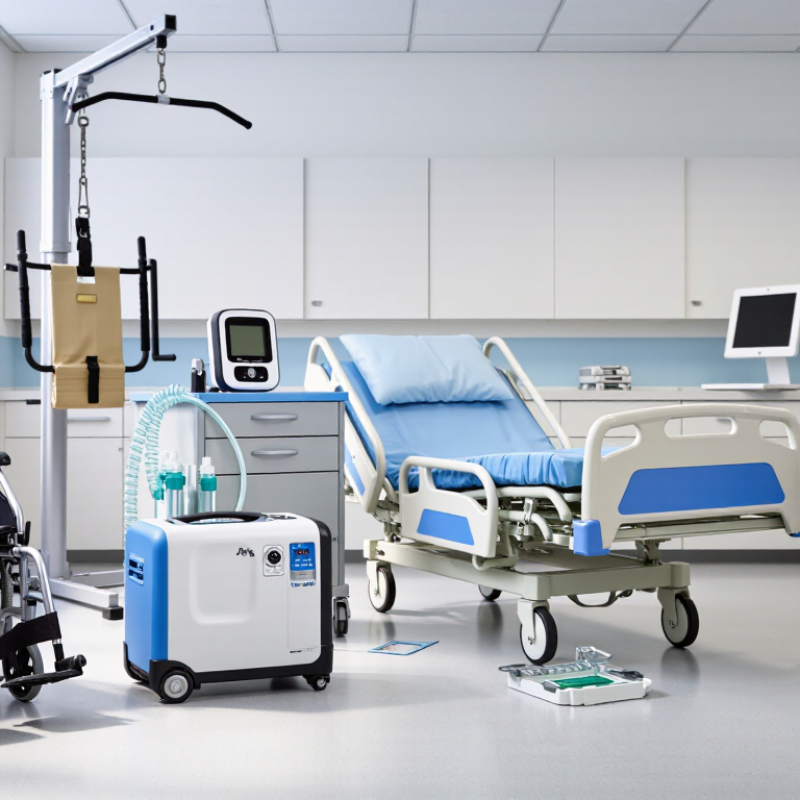
A home-care hospital bed should offer adjustable height, backrest, leg elevation, and secure caster brakes. Buyers should check mattress dimensions, side-rail options, emergency lowering, and power-failure performance. Patient lifts need more than a high weight rating. Sling compatibility, transfer clearance, battery access, and caregiver training affect daily safety. ISO 10535 provides a useful reference for mobile and standing lifts, but local requirements still matter.

Support surfaces deserve equal attention. Foam, alternating-air, and low-air-loss systems can help manage pressure, moisture, and repositioning needs. The correct choice depends on mobility, skin condition, body weight, and care frequency. Fit matters. Measure twice. Procurement teams should request test certificates, cleaning instructions, spare-part availability, and service response times. The WHO stresses that assistive technology works best when matched to user needs and supported by trained providers.

In practice, buyers sometimes focus on purchase price and overlook installation or caregiver workload. That is an avoidable weakness. A lower-cost bed may become expensive when parts, training, or home access are ignored.

Respiratory and Monitoring Devices for Long-Term Patient Care

In 2026, global buyers are prioritizing respiratory and monitoring devices for long-term patient care. Demand reflects a persistent clinical burden. The World Health Organization reports that COPD caused 3.23 million deaths in 2019. Asthma affected about 262 million people during the same period. Home-care portfolios increasingly include oxygen concentrators, CPAP or BiPAP systems, nebulizers, spirometers, and pulse oximeters.

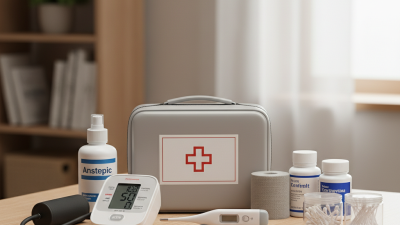
Monitoring equipment also deserves careful attention. WHO’s Global Report on Hypertension states that 1.28 billion adults aged 30–79 had hypertension in 2021. Nearly half were unaware of their condition. Reliable blood-pressure monitors, ECG devices, and connected vital-sign systems can support earlier intervention. However, connectivity is not a cure. A device may perform accurately in testing but confuse an older patient beside the bed. Procurement teams should examine usability, alarm clarity, battery duration, data security, and service availability.

Tips: Request independent accuracy evidence, calibration procedures, and training materials. Check whether manufacturers follow ISO 13485 quality systems and relevant IEC 60601 requirements. Confirm local registration and electrical compatibility before shipment. For oxygen equipment, review flow-rate stability, noise levels, filter replacement, and backup planning. For remote monitoring, test data transfer in rural settings. This step is often overlooked. A smaller, dependable system may serve patients better than a feature-heavy device with weak technical support.

2026 Top DME Medical Equipment Types for Global Buyers

Adult resting reference ranges commonly monitored by respiratory and patient-monitoring devices in long-term care. Compare values within each row because the measurement units differ.

Reference ranges: oxygen saturation 95–100%, respiratory rate 12–20 breaths/min, pulse rate 60–100 bpm, systolic blood pressure 90–120 mmHg, and body temperature 36.1–37.2 °C. These are typical adult resting reference values and are not a substitute for clinical assessment.

Selection Criteria: Safety, Compliance, Sourcing, and International Delivery

For global buyers in 2026, DME selection should begin with the patient’s daily environment, not a product catalog. Common categories include wheelchairs, walkers, hospital beds, oxygen-related equipment, transfer aids, and pressure-care mattresses. Each type creates different safety demands. A hospital bed needs stable locking casters, pinch-point protection, and clear weight limits. A wheelchair needs reliable brakes, suitable seat dimensions, and tested frame strength. Fit matters. A device that looks advanced may still fail in a narrow home doorway.

Safety evidence should include risk assessments, inspection records, user instructions, and traceable batch information. Buyers should verify destination-market requirements, electrical standards, labeling rules, and applicable quality-system expectations. Requirements differ by country. Ask for current certificates, not screenshots with missing dates. A competent supplier should explain testing scope without vague promises. Procurement teams should also review materials, spare parts, warranty handling, and repair training before payment. Low prices can hide costly downtime.

International delivery requires more than freight booking. Confirm package dimensions, moisture protection, customs documents, tariff classifications, and receiving-site access. Battery-powered equipment may need special transport paperwork. Agree on Incoterms, insurance responsibility, delivery milestones, and damage-reporting procedures in writing. Inspect serial numbers and packaging photos before dispatch. No checklist is perfect. Specifications can change during negotiation, so a final signed configuration remains essential. A small mistake in voltage, connector type, or user weight can delay care for weeks. Careful sourcing is slower, but safer.