Top Medical Devices for Global Procurement in 2026?
As we approach 2026, the global demand for medical devices is set to rise significantly. This surge is driven by technological advancements and an aging population. Many healthcare providers are seeking innovative solutions to improve patient outcomes. The landscape of medical devices is constantly evolving, with new products entering the market almost daily.
However, not all medical devices deliver the expected results. The challenge lies in ensuring that the devices are safe and effective. Procurement teams must evaluate products carefully, balancing cutting-edge technology with reliability. Importance should also be placed on cost-effectiveness, which is crucial for healthcare budgets worldwide.
In this dynamic environment, understanding trends and identifying top medical devices becomes essential. As healthcare continues to change, procurement strategies must adapt. This article will explore potential medical devices shaping the future and highlight key considerations for buyers.

Top Trends in Medical Device Procurement for 2026
As we approach 2026, medical device procurement is evolving rapidly. This shift is driven by advancements in technology and changing market demands. Increasingly, healthcare facilities prioritize devices that enhance patient outcomes. Minimally invasive tools are gaining traction. They promise quicker recovery times and fewer complications.
Another trend is the focus on sustainability. Hospitals and clinics are implementing greener procurement practices. Reusable instruments reduce waste and lower costs over time. However, not all facilities adopt these practices effectively. Some struggle with balancing cost and sustainability.
Digital transformation also plays a significant role. Telehealth devices are becoming essential. They enable remote monitoring and consultations. Yet, there are challenges in integration with existing systems. Data security remains a pressing concern. Ensuring compliance with healthcare standards is critical. The path to innovation is rarely straightforward, highlighting areas for improvement.
Top Medical Devices for Global Procurement in 2026
| Category |
Device Type |
Expected Growth (%) |
Key Regional Market |
Main Application |
| Imaging Devices |
MRI Machines |
7.5% |
North America |
Diagnostic Imaging |
| Surgical Instruments |
Robotic Surgery Systems |
10.0% |
Europe |
Minimally Invasive Surgery |
| Wearable Devices |
Health Monitoring Wearables |
15.0% |
Asia-Pacific |
Preventive Healthcare |
| Orthopedic Devices |
Joint Replacement Implants |
6.0% |
Latin America |
Orthopedic Surgery |
| Cardiovascular Devices |
Stents and Catheters |
8.0% |
Middle East |
Cardiac Procedures |
Innovative Technologies Shaping the Future of Medical Devices
The future of medical devices is being shaped by innovative technologies. As we approach 2026, several advancements stand out. Artificial intelligence is already transforming diagnostics. Machine learning algorithms analyze vast amounts of data, pinpointing diseases faster than traditional methods. This improves patient outcomes but raises questions about data privacy and security.
Wearable technology continues to gain traction. Devices monitor vital signs in real-time. They empower patients to take charge of their health. However, accuracy and reliability are ongoing challenges. Not all wearables provide consistent results. Some users may struggle to interpret the data correctly, leading to potential misunderstandings.
Telemedicine is revolutionizing patient care, offering remote consultations. This service increases accessibility for many, yet it has limitations. Certain conditions require physical examinations, which virtual consultations cannot provide. Balancing innovation with practical application poses a significant challenge for healthcare providers. As we advance, stakeholders must consider ethical implications and strive for improved reliability in these technologies.
Key Market Players in Global Medical Device Supply Chain
In the dynamic landscape of medical devices, key market players play a critical role. They are responsible for driving innovation and ensuring the supply chain remains efficient. These players span various regions and sectors, contributing to a global network essential for healthcare delivery. Understanding these entities helps stakeholders navigate complexities.
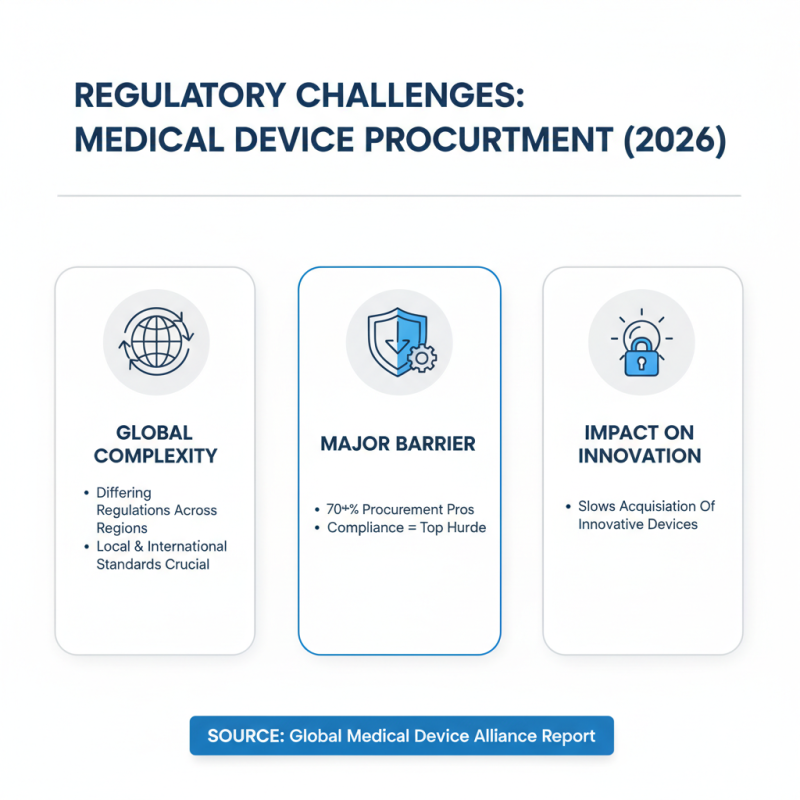
Leaders in the medical device industry often excel in research and development. Many invest significantly in emerging technologies, such as telemedicine and wearable devices. However, not all companies successfully adapt to rapid changes. Some struggle with regulatory challenges or fail to meet evolving patient needs. This inconsistency can create gaps in the supply chain.
Collaboration is vital among these market players. Partnerships between manufacturers, distributors, and healthcare providers can enhance service delivery. Yet, the reliance on a few major companies raises concerns about supply chain vulnerabilities. Small and mid-sized players often produce innovative solutions but face obstacles to entry. Rethinking these dynamics could lead to a more resilient ecosystem for global health challenges.
Top Medical Devices for Global Procurement in 2026
This chart represents the projected market share of different medical devices in the global procurement landscape for 2026.
Emerging Markets and Their Role in Medical Device Distribution
Emerging markets are reshaping the medical device distribution landscape. According to a report by Research and Markets, the global medical device market is expected to reach over $800 billion by 2026. These markets are vital growth areas, driven by rising healthcare demands and a focus on improving patient outcomes.
Countries like India and Brazil are experiencing rapid growth. The World Bank estimates that healthcare spending in these regions will double in the next five years. This expansion creates new opportunities for global procurement. However, challenges remain. Regulatory barriers and inconsistent quality standards can hinder effective distribution.
Investment in local manufacturing is growing. It's essential to improve supply chain efficiency while fostering innovation. Yet, the reliance on imports in many emerging markets raises concerns regarding sustainability. Local partnerships can help mitigate risks and enhance market reach. Understanding local needs is crucial for success in these diverse environments.